The Reality: One Organization, Many Campaigns
For many nonprofits, fundraising used to look pretty simple. There was one big event on the calendar. Maybe it was an annual gala, a golf tournament, or a dinner with donors. The team spent months preparing. Volunteers gathered. Sponsors were secured. Donors showed up. Money was raised. Then everyone took a deep breath and started planning for next year.
But fundraising has changed. Today, most nonprofits aren’t relying on one event to fund their mission. They are building a year-round fundraising strategy that includes multiple ways for supporters to get involved.
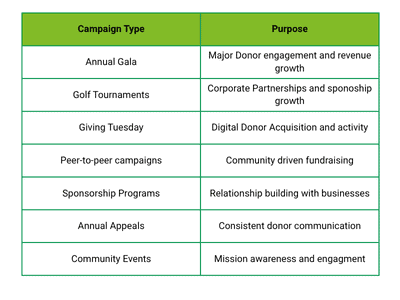
A nonprofit might host:
- Spring golf tournament
- Fall auction gala
- Giving Tuesday campaign
- Peer-to-peer fundraiser
- Sponsorship campaign
- An online donation drive (Online giving tops expected growth at 60%)
- A community event
- An annual giving campaign with recurring giving
According to Greater Giving research, 91% of nonprofits run multiple fundraising campaigns throughout the year.
That number tells us something important:
Fundraising is no longer one big moment. It is a collection of moments that happen throughout the year.
The organizations that understand this shift are creating more opportunities to connect with donors, volunteers, sponsors, and supporters.
The organizations struggling are often trying to manage a modern fundraising strategy with technology designed for an older model.
The Mindset Is Changing
If you work in fundraising, you’ve probably heard someone say:
“Our annual gala is our biggest fundraiser of the year.”
And it may be true.
Events are powerful. They bring people together, create emotional connections, and give donors a memorable experience.
But here is the challenge:
Your gala is not the only time your supporters care about your mission.
A donor who attends your auction might also want to:
- Make a year-end gift
- Sponsor a program
- Participate in a golf tournament
- Invite friends to support your cause
- Become a recurring donor (53% of nonprofits already run recurring giving campaigns, 11% are launching soon))
Every interaction is an opportunity to strengthen the relationship.
The event is not the entire fundraising strategy. It is one important part of the supporter journey.
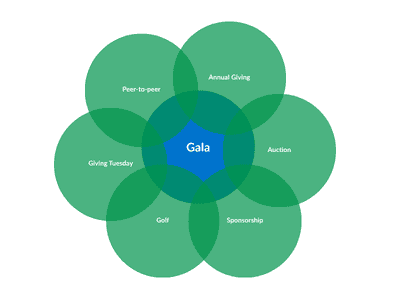
Your nonprofit doesn’t have an event calendar. It has a fundraising ecosystem.
Think about your fundraising year like a garden.
You don’t plant one seed and expect an entire garden to grow.
You nurture many things at different times:
- Some campaigns bring in new supporters.
- Some deepen existing relationships.
- Some generate immediate revenue.
- Some build awareness for the future.
Each fundraising activity serves a purpose.
The goal isn’t simply to add more campaigns.
The goal is to create a connected experience where each campaign supports the next.
The Challenge: More Fundraising Opportunities Can Create More Complexity
Running multiple campaigns is exciting.
It means more opportunities to reach supporters and increase impact.
But it can also create challenges.
Many nonprofit teams find themselves juggling:
- One system for event registration
- Another tool for online donations
- Separate spreadsheets for sponsors
- Manual reports after each fundraiser
- Multiple payment processes
- Different communication lists
Before long, the team spends more time organizing information than building relationships.
And for many nonprofits, that’s the frustrating part:
They don’t have a lack of effort.
They have a lack of connection between their systems.
More technology does not always mean easier fundraising.
The goal is not to collect more tools.
The goal is to have technology that helps your team work smarter.
Good fundraising technology for nonprofits should help answer questions like:
Before a campaign:
- Who are we trying to reach?
- How will supporters register or participate?
- How will we track sponsors and donors?
During a campaign:
- How are we performing?
- Are supporters engaged?
- Is the giving experience simple?
After a campaign:
- What worked?
- Who were our most engaged supporters?
- How can we build the relationship?
Your CRM Knows Your Donors. Your Fundraising Technology Helps You Engage Them.
Many nonprofits already use a CRM (Customer Relationship Management Software) aka DMS (Donor Management System). 29% still manage donors on spreadsheets or manual tracking
A CRM is incredibly valuable because it helps organizations understand their supporters:
- Who has donated before?
- What programs do they care about?
- How often do they give?
- How long have they been involved?
But a CRM alone does not create a fundraising experience. It does not run your auction. It does not manage your paddle raise. It does not create a seamless event check-in experience. It does not help your supporters participate in your golf tournament.
That’s where fundraising technology for nonprofits comes in.
A simple way to think about it:
Your CRM tells you who your supporters are.
Your fundraising technology helps you create meaningful ways for them to engage.
Together, they help nonprofits build stronger relationships.
The Future of Fundraising Is Connected
The best fundraising organizations are moving away from thinking:
“We need software for our event.”
Instead, they are asking:
“How can technology help us create better experiences for our supporters all year long?”
Because fundraising is not just about collecting donations.
It is about creating moments where people feel connected to your mission.
The auction winner who becomes a major donor.
The golf sponsor who becomes a long-term partner.
The Giving Tuesday donor who joins your monthly giving program.
The volunteer who becomes your next fundraising ambassador.
Those relationships are where long-term growth happens.
How Greater Giving Helps
Greater Giving was built around one of the most important moments in fundraising: bringing people together around a mission.
But today’s nonprofits need more than a tool for one event.
They need technology that helps them create successful fundraising experiences before, during, and after every campaign.
Whether you are planning an auction, gala, golf tournament, online giving campaign, or another fundraising initiative, Greater Giving helps nonprofits simplify their processes, engage supporters, and create experiences that inspire giving.
Because your fundraising doesn’t happen in just one moment.
And your technology shouldn’t either.
Frequently Asked Questions
How many fundraising campaigns do nonprofits run each year?
Most nonprofits run more than one fundraising campaign each year. Greater Giving research found that 91% of nonprofits manage multiple fundraising campaigns, including events, digital campaigns, sponsorships, and donor appeals. Between 2–6 events or campaigns annually are the most common.
Do nonprofits need different software for every fundraiser?
Not necessarily. Many nonprofits benefit from using connected fundraising technology that supports different campaigns while making it easier to manage donors, payments, and reporting.
What is fundraising technology?
Fundraising technology includes software that helps nonprofits manage fundraising activities such as events, auctions, donations, payments, registration, and supporter engagement.
What is the difference between a CRM and fundraising software?
A CRM helps nonprofits organize donor information and relationships. Fundraising software helps nonprofits create and manage the experiences where donors participate and give.