Why the most successful nonprofits are turning one-time donors into recurring giving supporters.
For decades, nonprofit fundraising followed a familiar formula: spend months planning a gala, auction, golf tournament, or signature event, raise as much money as possible, then start planning next year’s fundraiser.
But today’s donors don’t engage with causes once a year. They engage year-round.
And increasingly, nonprofits are realizing that sustainable growth doesn’t come from asking for bigger gifts. It comes from creating deeper relationships.
That’s where recurring giving comes in.
According to Greater Giving’s latest industry research, 41% of nonprofits expect recurring donations to be one of their fastest-growing fundraising channels in the coming years, and more than half already have a formal recurring giving program in place.
The reason is simple: recurring donors provide more than revenue. They provide stability.
The Real Problem Nonprofits Are Trying to Solve
Ask most nonprofit leaders what keeps them up at night and you’ll likely hear one of three concerns:
“Our revenue is unpredictable.”
“We’re struggling to retain donors.”
“Our team is already stretched too thin.”
The data suggests they’re not alone.
According to the report:
- 53% of nonprofits say donor retention has plateaued.
- 16% report donor retention is actively declining.
- 61% run their development efforts with six or fewer team members.
- 33% operate with just two to three staff members.
This creates a difficult cycle.
Teams spend enormous amounts of time acquiring new donors through events and campaigns, only to see many of those supporters disappear after making a single gift.
Recurring giving breaks that cycle.
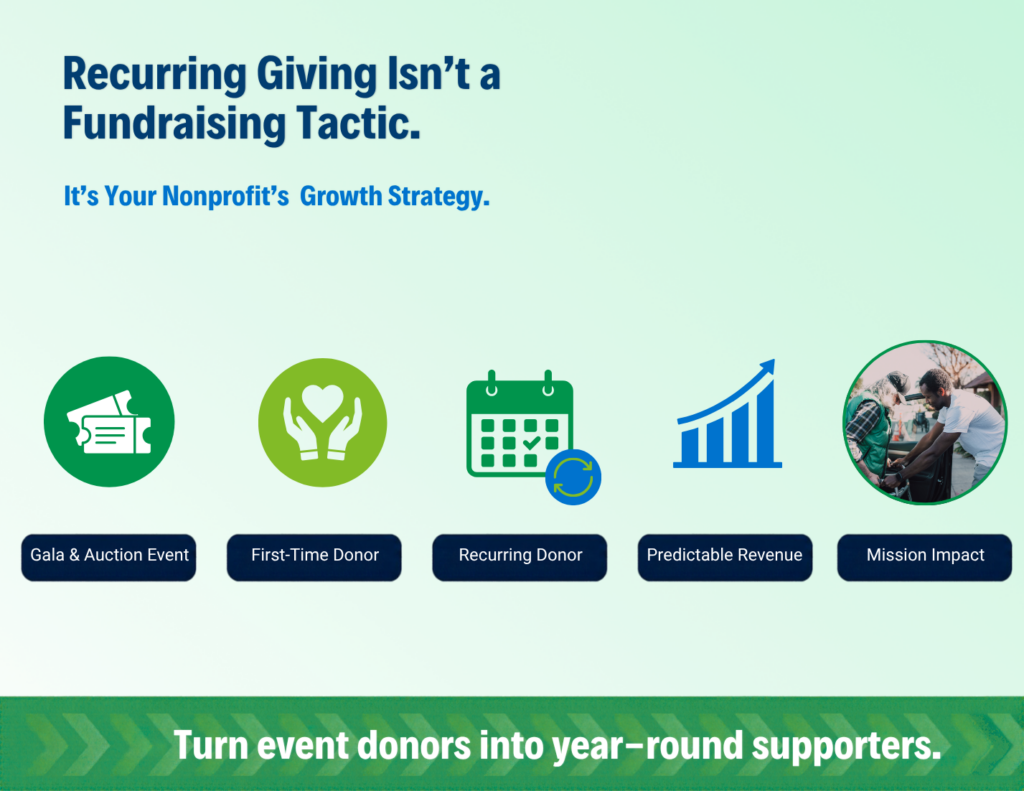
Instead of repeatedly fundraising from scratch, organizations build a predictable donor community that supports the mission month after month.
Why Donors Actually Prefer Recurring Giving
Here’s something many nonprofits overlook:
Recurring giving isn’t just beneficial for organizations.
It’s often preferred by donors.
Supporters increasingly want giving to fit naturally into their everyday financial habits. Just as consumers subscribe to streaming services, fitness memberships, and software platforms, they’re becoming comfortable supporting causes through automated monthly gifts.
A donor who may hesitate to make a $500 contribution today might gladly commit to $25 or $50 each month.
5 Ways to Grow Your Recurring Giving Program
1. Promote Monthly Giving Everywhere
Your monthly giving program shouldn’t live on a hidden webpage.
Feature it on:
- Event registration forms
- Donation pages
- Email campaigns
- Giving Tuesday appeals
- Program pages
- Social media content
2. Focus on Impact, Not Amounts
Instead of asking supporters to donate $25 a month, show what $25 accomplishes.
Impact motivates recurring behavior.
3. Invite Event Donors Immediately
The days and weeks following an event are critical.
Donor enthusiasm is highest when the experience is still fresh. The report highlights the importance of immediate donor stewardship while engagement remains strong.
4. Make Enrollment Frictionless
Simplify forms.
Reduce clicks.
Optimize for mobile.
The easier it is to join, the higher your conversion rates will be.
5. Celebrate Recurring Donors
Create a sense of belonging.
Whether it’s a named giving society, exclusive updates, or special recognition, recurring donors should feel like insiders in your mission.
Ready to Turn One-Time Donors Into Lifelong Supporters?
Building a successful recurring giving program doesn’t happen by accident. It requires the right strategy, donor experience, and technology to connect every fundraising touchpoint into a seamless donor journey.
The most successful nonprofits are no longer treating events, online giving, recurring donations, and donor stewardship as separate initiatives. They’re creating year-round fundraising ecosystems that turn event attendees into engaged supporters and recurring donors. According to Greater Giving’s research, 41% of nonprofits expect recurring donations to be a key growth area, while 53% already operate a formal recurring giving program.
Whether you’re looking to improve donor retention, create more predictable revenue, or maximize the impact of your fundraising events, understanding how modern nonprofits are adapting can help you build a stronger strategy.
Download the free playbook and learn how to close the fundraising gap while creating sustainable growth for your mission.